Sunday, January 21, 2007

Future Posts

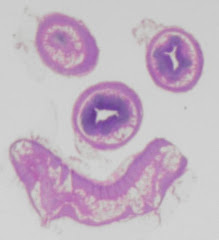
I hope you like the new look and I hope none of you is overly frightened by the photo (of me)! In the near future, look forward to a photo, or a case, of the month. This may grow into a quiz format to challenge you into digging into the books. With your comments, I will be glad to consider any/all ideas. Some of you might consider submitting some of your best photos for the page.

I hope you are all managing the long winter months. I know that I've had just about enough of no kayaking and no biking.

Sunday, January 14, 2007

Pat yourself on the back - maybe later

Re-posted (edited version; I apologize for any resultant incoherency) - 2007/04/25:
Analysis of statistics which support good practice by PAs and their contribution to high quality healthcare have not been possible at many centres before. Most centres experienced a more or less gradual introduction of PAs which spanned decades. In contrast, the Interior has a clearly-defined date at which time PAs were introduced.

I have heard previously of oncologists and GI surgeons who want their patients' specimens only examined by PAs (links have been provided via the AAPA site on previous occasions). Finding a sufficient number of lymph nodes at the first sitting increases the provision of accurate reports in a timely fashion (turnaround times are reduced).
I would like to remind PAs of the importance of not only finding all of the lymph nodes in the mesocolon but also of identifying the proximity of lymph nodes relative to the radial margin (requiring that the margin be inked and then serially sectioned at right angles to the margin). If nodes are within 0.3 cm of the margin, this fact is a significant predictor for metastasis. If an insufficient number of nodes are found at the first exam, the fat should be re-examined after a day's fixation in a clearing solution such as modified Carnoy's fixative. A comment concerning the quality of the radial margin on total mesorectal resections (TME) should be added to your gross description. There are different methods of grading the margin which include a numbering system, from 1 to 3, reflecting the relative completeness of the margin. Another -- which I prefer -- uses description (ie. intact vs. incised, irregular and/or conically-shaped vs. incomplete) . While on the topic of TMEs, the prosector should give the location of the mass relative to the peritoneal reflection (above, astride or below). Except in cases where the tumour is situated very close to the anal resection margin, the rectum is to be left unopened, fixed over night, and serially sectioned transversely. This is without a doubt the best way of accurately ascertaining the depth of invasion and of providing with certainty the distance from the tumour to the radial margin.

Sunday, January 07, 2007

It's about time!

I know that this may be hard to believe for many PAs elsewhere in Canada, but this past week marked a milestone here in the Interior Health Authority's gross rooms. The first Okanagan-wide surgical pathology (for grossing) procedures were distributed. So much effort since spring, 2005 has gone into just keeping our heads above water that progress has been terribly slow at times (and for this I apologize). Manpower levels are beginning to get to the point where gradual improvements can now be made. These 'in-brief' procedures, and all submitted in the future, will improve our ability to meet the requirements of the soon-to-be-implemented quality management system in which the existence of policy and procedure manuals (and abiding by them) is a cornerstone. Standardization of methodology will result in an overall improvement in quality and consistency in surgical pathology. The pathologists' participation in the creation of procedures is absolutely necessary in order to guarantee an excellent product. Their input will be needed at the first round of revisions of the procedures, beginning in six months.
The next step is to consider, and to implement, gross description templates. This is a contentious issue for some pathologists who may not appreciate the power of templates to ensure a minimum level of quality; and to do so invisibly and seamlessly from their perspective. The transcriptionists, if a space in the template is mistakenly left blank, will interact with the PA so that the blank is filled in before the report and the slides find their way to the pathologist's desk. Issues surrounding concerns about PAs' grammar, vocabulary or accents become unnecessary as the templates are primarily in point form. Each template has a space where the PA may provide additional, free-text description, as necessitated by the each specimen's unique nature. Well-designed templates require very little additional description of this sort however. Templates, much like synoptic reports for diagnosis, answer all the necessary questions for both pathologist and oncologist; little more and no less. Superfluous, flowery, or unnecessary language is avoided. They are far easier, and far less time-consuming, to decipher than a traditionally-worded description. They have been in use at many other centres for many years and have been well received by PAs, transcriptionists, residents, oncologists and pathologists alike. Like procedures, gross description templates provide a quality assurance tool which improves our product.
The last step in the creation of the manual will be to make up the full-length policy and procedure documents. These will provide more information than the brief versions; will give the rationale behind various methods and will list references. Policy and procedure documents governing the general rules for handling specimens, safely, telepathology, photography and other gross room functions will also be written.
As Laboratory Medicine in the Interior Health Authority moves towards participation with The University of British Columbia Medical School, the manuals will be an excellent resource for training of medical residents in surgical pathology.
Other news...
A second PA is starting in Kelowna on the 15th of January. Considerable renovations are being effected in the near future to allow for a safe work space for the PA, to provide office space for more pathologists and a clinical microbiologist, and to improve work flow in the gross room for frozen sections, etc. One of our PAs is returning from parental leave tomorrow. Welcome back!
Wish us luck; our Meditech IT system is being upgraded (?improved). I'll reserve judgment on whether it'll be any more user-friendly than it is currently. So often, IT systems and "user-friendliness" seem to have a hard time co-existing.

Saturday, December 30, 2006

Season's Greetings!

I want to extend best wishes to all of Canada's PAs and to wish you health and happiness for the coming year. I hope you managed to get some down time to re-charge your batteries and to spend some quality time with family and friends.

Sunday, December 17, 2006

Expectations

1. If the anonymous pathologist would like to participate in a dialogue, please identify yourself. We can continue in a less public conversation if you wish. I welcome your comments (and welcome the opportunity to converse on the subject) but the wording of them is intended to induce a response (a dialogue).

2. Clearly, there are unrealistic expectations being put upon PAs (locally). If what is desired is simply to retain, or regain, the status quo (no PAs), negativity will prevail. If fault is sought, it will be found. If the introduction of PAs is viewed as an opportunity and a challenge rather than an impediment, good things may be realized. PAs are here -- to stay, I hope. I'd suggest that the best of this purportedly 'bad' situation be made for the public's, if not for the hospital's, the department's or even the pathologist's sake. A look at the rest of the continent, at medium- and large-scale teaching organizations, may serve to illustrate the type of relationship that exists between pathologists, clinicians and PAs. Rather than attempting to ostracize, criticize and isolate the PA(s) with whom you are forced to work, include them so that they may be aware and informed. I doubt that the relationship that pathologists have with histotechs (with whom they interact many times each day; both as friends and fellow professionals) could be interpreted as "baby sitting." Au contraire, there are many real friendships that have sprung up between pathologists and histotechs. Yet, the PA sits alone in the grossing room awaiting the next critical comment; usually several days after the grossing of the specimen ("Why didn't you take sections of...?!). How about being proactive? A pathologist (the same pathologist who would be responsible for grossing or frozen sections) ought to be responsible for the goings-on in the gross room and ought to visit EACH morning to review the complex specimens with the PAs and to be available throughout the day to field questions from the PAs. If nothing else, the pathologist and the PA will become acquainted. More importantly, this sets up a teaching environment wherein the pathologist can answer questions and give direction to the PA.

Manuals are finally being created for the area. The pathologists will be asked to provide input into the first round of revisions of the policies and procedures. The manual will be used by whomever (PA or pathologist) is performing the gross and this standardization will go a long way towards an overall improvement in the quality of the surgical pathology 'product.' The manual, in and of itself, acts as an instructional document for the PAs as it will also attempt to give insights into why specimens are handled and sectioned in a particular manner. A means by which the pathologists may become proactive is by becoming involved in the discussions surrounding the wording of the procedures. As the Interior migrates toward an educational environment, these manuals will also serve as invaluable resources for pathology residents (who, like PAs, may be reluctant to admit that they have a lot to learn and who would far prefer to consult a manual than, heaven forbid, ask the pathologist and admit that they were overwhelmed by the flood of information when the pathologist explained how to describe and section a specimen the first time -- remember when you were a resident?). Needless to say, manuals are an absolute requirement of any quality-based facility -- something that many of us are becoming more and more deeply involved in -- and for good reason. "Document what you do" (namely, create a manual) and "Do what you document" (namely, abide by the manual).

PAs care as much about the patient (and about their continued employment) as any healthcare professional. Given the right tools and knowledge, they will perform their task with the same level of excellence as the others with whom they work each day.

Sunday, December 10, 2006

"Credible"

I received an interesting comment to my previous post, presumably from a Pathologist, which stated that s/he had not yet met a credible pathologist who would endorse a PA (but also considered that the PAs with whom s/he had worked were not worth endorsing).

I wonder if it is a safe assumption that this person has a low opinion of any pathologist who would endorse a PA. More likely, this person is not happy with the 'product' provided by her/his PAs (assuming s/he has PAs).

I recognize that there are many political issues and biases with which a few have had to deal if their experience with PAs is relatively new. It is a challenge for the PAs as well. PAs are not perfect; no one is. A pathologist who views a PA as an extension of her-/himself and teaches and encourages that PA to provide the quality of work that is required, is one who has, in my opinion, the correct attitude. If one is looking for faults, one is certainly going to find them, no matter who one is looking at. PAs are not MDs. Without hands-on support and supervision, they ought not be expected to have the same insights into the subtle nuances (even the not-so-subtle, for that matter) of pathology as pathologists have. This is not to say that they cannot, with the appropriate training, do perfectly adequate Gross Descriptions however. PAs depend upon the active input of pathologists into their day to day practice in order to improve their knowledge base so that they may provide Gross Descriptions which more and more closely approximate those which would be rendered by pathologists. I'd suggest that if the person commenting is dissatisfied with her/his PAs, that s/he: 1. hire individuals with a better background (a BSc will soon be the prerequisite for admission to a PA training course in Canada, as has long been the situation in the USA) and, more importantly, 2. provide on-going support for the PAs by giving regular feedback and instruction.

There is currently no college, in any province, for PAs. Any CME activities are purely optional and self-directed (if not by the employer or pathologist). With minimal encouragement, most PAs will gladly participate in seminars and rounds in order to further their knowledge so that they can improve the quality of their work. They will, in fact, do this even though they cannot claim CME credits (yet). I encourage all pathologists, whether they are just getting to know PAs or whether they have had PAs working for them for years, to continue to work WITH their PAs, rather than apart. Given the chance, PAs can be very good team players.